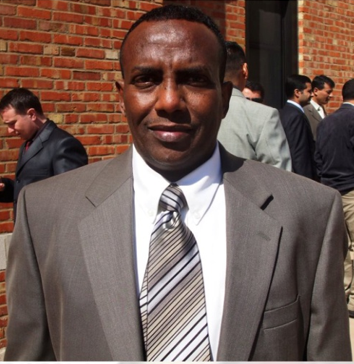
Qafar afih gaddaliino kee qadar — The richness of the Afar language and its literary heritage. Based on the conference "Conference on the Afar Language and Literature."
Source & Original Author
The content presented in this section is based on the original conference "Conference on the Afar Language and Literature" presented by Commander Hassan Mahamad Hassan.
All original research, photographs, diagrams, literary analyses, and conference materials remain the intellectual property of their respective author and presenter. This material is reproduced and digitally organized for educational, cultural preservation, language revitalization, and research purposes. The Afar Language Word Hub does not claim authorship of the original conference materials.
Conference on the Afar Language and Literature — preserving and transmitting the richness of the Afar language and the urgency of safeguarding oral traditions to future generations.
Conference Objective
To transmit to future generations the richness of the language and the urgency of safeguarding oral traditions.
Conference Plan
Inni kee buxa
My cultural background
Qafar afih gaddaliino
The richness of the Afar language
Qangara dab kee gamad le
Radical and privative suffixes
Qadar kee gaddi mansayya
Structure of Afar poetry
Qafar af kee faraaqiina
Ancient Egypt and the Afar language
Innih unkule kassow/gaditte
My literary writings
Sin qambaala fardi
The duty that falls upon you
About the Presenter
Commander Hassan Mahamad Hassan
The conference was presented by Commander Hassan Mahamad Hassan, a scholar of Afar language and culture. The presentation covers the presenter's cultural background, linguistic analysis, poetry, and research connecting Afar to ancient Egypt.
2. Afar Language
The richness of the Afar language — its linguistic characteristics, scientific expressions, and unique word formation patterns.
Scientific Language — Ear Examples (Ayti)
Afar Expression
Literal Meaning
Context
AYTI KUMA
the dive of the ear
Deep listening
AYTI KIBBI HAS
fill your ear (with liquid)
Pay close attention
AYTI KOK KAFE WAYTAY
may your ear not dry out
May you always listen
Scientific Language — Foot/Strength (Ibak Gibdi)
Afar Expression
Meaning
IBAK GIBDI
Harder than the foot
IBAK GIBDI ROB RADE
A rain harder than the foot
IBAK GIBDI QEB YEKKE
A battle harder than the foot
Afar & Greek/Latin Parallels
Some unexplained curiosities of the Afar language — words with Greek or Latin parallels:
FAAYFAILLE
SANSINUS
SINNASANS
LAGOLEG
MAAROMARE
IDALTUADULTE
INKIUNIQUE
MAGASMAJESTE
ENGELANGLE
ANGULIANGELUS
FUUGAFOUGUE
QARHARO
SATTASATIETE
ATLEATTELE
ANANOWANONNER
IKKEICI
DERREDERRIERE
TEELLOTELE
3. Word Roots & Morphology
Qangara dab (radical) kee gamad le (suffix) — Discovery of the word radical and privative suffixes. Each suffix transforms the meaning of a root word.
The Suffix DA — Privative, negation, reversal
Root
Meaning
With DA
New Meaning
CIN!
Refusal, avarice (CINAALE)
CINDA
Generosity
QAN!
To tame (QANO)
QANDE
Force, untameable
GIB!
To guard, to test (GIBA)
GIBDA
Durete, that cannot be tested
MUGA
Loss of hairs
MUGDA
Ineffaceable tattoo
BURA
Insufficiency
BURDA
Large quantity
LIG!, LIGLIG
To shake
LIGDO
Courage
QIGU, QAGU
To begin again
QIGDU
Never, not again
BAR, BAARI
Soul, strength
BARDA
Sponge, to break (BARAD)
HOR!, HOORO
To stop
HORDA
Flat terrain and stake
MANO
Life
MANDA
Volcanic lava where nothing grows
WAQ
Indeterminate time
WAQDI
Precise moment
SAN, SANAH
Desire, by force
SANDE
Face to face
FURA, FURAN
Porosity, softness
FURDA
Quai in hard material
GAN!, GANO
To attack by surprise
GANDI
Lamentation, sleeping sickness
GUN!, GUNE
Generosity
GUNDI
Child's loincloth
The Suffix QA — Transformation, opposite
Root
Meaning
With QA
New Meaning
ASSAM
Misery, suffering
ASSAMAQ
Ease, comfort
AAMA, UMAANE
Bad, to worsen
AMQA
Good, reconciliation
SATTA
Satisfaction, satiety
SATQA
Hunger
DARA
Clear/limpide water
DARAQ
Muddy water
GAR
Right, legitimate
GARAQ, GARQA
Theft, illegitimate
SUT
Inside, interior
SUTQE
Epidermis
BURA
Insufficiency, little
BURQI
Thick, dense hair
BAR
Soul, strength
BARQE
Hunger, misery
The Suffix GA — Negation, castration, reversal
Root
Meaning
With GA
New Meaning
QANO
To tame, domesticate
QANAAGE
Force, untameable
QANO
To tame
QANGI
Male crocodile
BAR
Soul, strength
BARUG
Extinction
BAR
Soul, strength
BARUGA
Cadaver, corpse
DARA
Clear water
DARAGU
Mixture of two liquids
SAN
Desire, envy
SANGA
Castrated, sexual impotence
DAL, DAALA
Family, clan
DALGA
Castrated
WAAR
Eternity
WARGU
Precise time
DIR!
Get lost!
DIRKI
By force
The Suffix CA — Transformation, reversal
Root
Meaning
With CA
New Meaning
MIRRI
Fear
MIRAC
War chief
MUXXO
Exuberance, plus
MUXCA
Bald head
BAR
Soul, strength
BARAC
Vegetative state
MAK
Full turn
MAKCA
Not to appear
BADI
Disappearance
BADIC
Existence
ANGODDI
To contradict
INGIDDIC
To be mute, silent
4. Afar Poetry
Qadar kee gaddi mansayya — Structure of Afar poetry: syllable-based poetic forms with rich oral tradition.
12 Syllables (Mansayya)
KASSOW
12 syllables — epic poetry form
Kassow oobbeh emeete kalluwan mayyu
SAXXAQ
12 syllables
Saxxaq abah maballiyok tanna kinni?
MAXHAXIS
12 syllables
Maxhaxis mininil le seelis angul le
HELLALLE
12 syllables
Kuyya laahi miraacow anni way k'ablo?
KOORA GAD
12 syllables
Yi saqalle baxaw lee tab'aali fillaw
11 Syllables
KAXXA GAD
11 syllables — long poem form
Kaxxa gad way abuk le marat yayse
GINNILI
11 syllables — words as soft as silk
Away yaabe liyok gaba yoh xaga
KALLUWANLE
11 syllables
Gaaday wadir ixxica tee mokonni Inki'nnah magaadina tee mokonni
DAAR-LAAHI AF
11 syllables
Kifnoh innah fuluk'ttam kok gexxeemi
10 Syllables
ROYYAN
10 syllables — narrative poem
Royyanal deben oobi yoo maha
BOORI SAXXAQ
10 syllables
Ku'nti yuble kaafirti yuslumeh
HELLALLIYO
10 syllables
Ib qasih gexem keenal eexege
DAAR-DAQAR AF
10 syllables
Ni daqar caban daqar hinnoy hee
DAAR-GAAL'AF
10 syllables
Gaali nammaamat nee baaheleyya
FARAS SAARE (QADAR)
9-10 syllables
Maldayya lem yi camit tanih (9) Yoo mara numuk makalinnito (10)
8 Syllables
LAALE
8 syllables — lyrical form
Y'aabinok cammadi gaysa Yot makeenim biqdi gaysa Y'aabeenim inti le raysa
KEEKE
8 syllables
Keekisey kamus wagitnuk Usuuley dat af wagitnuk
Poetry Forms (Saare)
GAALI SAAREPraise poetry
LAAHI SAAREDivine praise
ILLI KEE WADAR SAARESheep & goat poetry
DANAN SAARECattle poetry
FOOXIMA SAAREWilderness poetry
ECEYYA SAAREWomen's poetry
Additional Forms
LAALE
MALAABO
BADDI KUBUR
MABLUD
HEDDADDE
DIIDADIIDA
HORRA
5. Famous Afar Authors
Profiles of influential Afar authors, poets, and scholars who have shaped Afar literature and linguistic study.
Sheik Casan Camad-Laqde
1902–1972 — Renowned Afar poet and scholar
Sheik Casan Camad-Laqde was one of the most prolific Afar poets. His work Nawaadir documents 200 dates of major historical events, wars, funeral ceremonies, and Afar cultural values through poetry. He chronicled the period between the Afar and Cuggi peoples.
Camad-Laqde (the younger)
1937–1981 — Poet and literary figure
Notable works include:
Naharsi maaqatta (1962)
Abba barrah xago (1963)
Yakku waa baxi kas qunxih geya (1965)
Akaalaf tooboko (1973-1974)
Cabuy soxay sabara (1969-1972)
Sabti waane (1978)
Gab'aatuka (1963, UDA)
Tekkem taaxago (1965)
Saakuy aysuk eysiya (1969)
Mabaxaysitina (1977-78)
Camad-Laqde — Poetry Themes
Yab Bacaar Yakke — Truth and falsehood
Numma kee diraaba
Truth and falsehood
Yani kee deedala
Existence and non-existence
Asmat kee awnana
Confidence and betrayal
Ku yab kee marin yaaba
Your word and half-word
Didier Morin
French linguist and Afar language scholar
Major contributions to Afar linguistic study:
Le Ginnili — Study of Afar poetry
Words as Soft as Silk — Traditional Afar poetry collection
Poésie traditionnelle des Afars (1997, SELAF/Peeters)
Ankaale
Contemporary Afar poet
1984 — Began literary career
1987 — First prize in the national poetry competition organized by the Palace of the People
1987 — Kuun xaltiy galto wayti deqsitta ransa (UDC)
1988 — First prize in the poetry competition of the National Cultural Forum
Kassow Poets
Tolah Canfaxe Madqah Abba
Malak Callato
Hadigto Muusa
Caawino
Wagab Casan
Doolab Cummad
Xer Casan
Qasa Qabbo
Casan Baadari
Casan Cagaayo
Kaamil Cagaayo
Data Yuusuf
Heebano Baxa
Macammad Secem
Qalii Saqiidi
Wade
6. Traditional Songs
Muuzik Gaditteh Saqolti — Traditional Afar music and composers. A rich tradition of oral musical heritage.
Traditional Composers
Camad Laqde
Talca
Sek Acmad
Haarun Dawud
Secem Dawud Barkat
Cusen Qabbas
Qabbas Doogali
Faraddi Baxa
Qali Aflo
Qali Dulla
Qalwan Burhan
Cusen Finqa
Qafar Baxa
Acmad Malko
Asiya Suleeki
Babbeyna
Qumar Suleeki
Macammad Cuseen
Songs and Their Composers
Title
Year
Composer
Intil GABA Haan Saaku
1988
Macammad Qumar
Atu Kah Tenem Baxuwwayto
1988
Macammad Qumar
Afrikay Farmo Koh Ruuba
1989
Qabdalla Lee
Qafaray Qafarre Hawwente
1989
Abayadid Badri
Coosiyyo
1991
Qabdalla Lee
Isi Sahte Num Sinam Sahtah
1992
Pere Robert
Ittin Gey Gira Kok Waasa
1992
Pere Robert
Doolattiino Kak Iyyaanam
2010
Qunxa Ibrahim
Dadalah Yi Toobokoy Soola
2010
Cuseen Hayle
Doolat Niimi
2010
Cuseen Hayle
Kassow kee Royyan Poems
Abaaro
Aydaadu
Moynob
Fardi
Fiqma
Qaafiyat Dorro
Cabib Dorro
Moddaqiino
Figi Nee Gin'Ayro
Soono
Fannaanow
Cellafaadi
Wagta Beera
Inkitto
Gadaama
Deero
7. Ancient Egypt & Afar Language
Conference Research Material
This section presents research perspectives from the conference presenter, Commander Hassan Mahamad Hassan. These are the presenter's research perspectives and are presented as-is to preserve academic neutrality. The material should not be rewritten or reinterpreted.
Letter to the Pharaoh (1991)
Concept
Afar
The double Crown (red & white crown)
Qasah'yya maray qadoh'yya mara
The Creative Word
Yab y'aabeh y'abb'aabe
The two serpents and eternity
Waarra kee waar
The opening of the mouth
Afbeeca, Affeeca, Afdeeca
The Octoade (8 forces)
8 awsa, 8 moodayto, 8 cammadi siirat, 8 songogoda
The son and the God of the earth
Baxa kee Baaxo
RA / AF — Mouth, Word, Opening
Egyptian (RA)
Afar (AF)
Meaning
RA
AF
Mouth
RA
AF
Word, Speech
RA
AFA
Doorway
RA
AFA
Exterior
RA
AFA
Opening, Outlet
NOU / LE — Water, Possessing, Containing
Egyptian (NOU)
Afar (LE)
Meaning
NOU
LE
Water
NOU
LE
Possessing
NOU
LE
Containing
DJ / WAAR — Serpent, Eternity
Egyptian (DJ)
Afar (WAAR)
Meaning
DJ
WARRU
Serpent
DJ
WAAR
Eternity
DJ
WARRE
Past
DJ
WARE
To announce, say
MOUT / ININ — Owl, Mother
Egyptian (MOUT)
Afar (ININ)
Meaning
MOUT
ININ
Owl
MOUT
INA
Mother
MOUT
INNA
Means and manner
MOUT
INNI
Pronominal SE
Scholars Referenced in the Conference
Previous Controversies — Champollion's Work
The presentation references Dr. Ossama Alsaadawi's critique of Champollion's approach to the Rosetta Stone, noting that Champollion assumed cartouches contained king names corresponding to Greek text, which Dr. Alsaadawi challenges. Also references work by ENEL (Russian Egyptologist) on the Sacred Language, and Rene & Isha Schwaller de Lubicz (HER-BAK).
Afar, Ophir and the Mists of History
Dr. Orville Boyd Jenkins — Question: "Are the Afar people from the Ophir peoples of the queen of Sheba? The name is so closely related sounding."
8. Traditional Afar Astronomy
Afar traditional knowledge of the sky — stars, constellations, months, weekdays, calendars, and planet names.
Weekdays
SabtiSaturday — Sabootana
AcadSunday — Kabootana
EtnénMonday — Beerana
TalaataTuesday — Darmaana
ArbaqaWednesday — Tubbuulusu
KamisThursday — Kammuunusu
GumqatFriday — Tubbubuulusu
Months (Alsa Alsitteh Migooqa)
Qasuura
Safar
1 Gumaadi
2 Gumaadi
3 Gumaadi
4 Gumaadi
Ragab
Walaanaba (Soom Baahe)
Soomu
Soom Futri
Qerfa Baahe
Qerfa
Solar Months (Ayroh Alsitteh Migooqa) — Starting 23 September
Inanab
Inkibarta
Garablu
Yengeelen
Abrooma
Qado Dirri
Qasa Dirri
Laqan
Waysu
Yangulta
Diteli
Ximoli
Planets (Cutuk Migooqa)
BolyeMorning Venus
Bokol SigisEvening Venus
Qado DirriJupiter
Qasa DirriMars
SawurSaturn / Taurus Constellation
MalcinoGreat Bear
Zodiac — Qado Mafdagoogi (Northern)
Guraalu Aries
Laysan Aries
Kayma Pleiades
Sawur Taurus
Adala Orion's Belt
Saxxan Gemini
Yangulta Gemini
Data Qaran Cancer
Kada Leo
Diraq Leo
Waysu Leo
Danab Leo
Dirri Virgo
Zodiac — Qasa Mafdagoogi (Southern)
Salmaan Virgo
Mamuq Libra
Sudaaduc Scorpio
Lubbi Scorpio
Adim Scorpio
Adraan Two Quadrilaterals near Sagittarius
Qaniid Starless zone east of Sagittarius
Geydi/Gita Capricorn
Kaqkiil Aquarius
Keysi Aquarius
Bulfaan Aquarius
Kurbi Pegasus
Afeeger/Afgira Pegasus
9. Literature Archive
A growing collection of Afar literary works, research papers, articles, and reference materials.
A significant work on Afar poetry and literary tradition.
Saalic Macammad Hassan — Camad-Laqdeh Kitaaba
Book dedicated to the works of Camad-Laqde, documenting his poetry and literary legacy.
Matar Faxxam Mangoh — Key Topics
Hayyoona
Missila
Qadar
Dooqa
Dayla
Cutuuka
Buqre
Dacarsitto
Migaaqitte
Otoyno
Aydaadu
Ilko
Madqa
Cexmo
10. Bibliography
Complete list of references cited in the conference and related Afar language scholarship.
Dimis, Ahmed Abdallah et Reedo, Gamal Adin.Qafar afih baritto (livre de lecture) et Qafar afak yabti rakiibo (livre de grammaire), Imprimerie parisienne de la Réunion, Paris, 1976.
Mohamed Kadamy. "Dossier sur la langue afar", Les Nouvelles d'Addis, n° 34, mars-mai 2003.
Mohamed Hassan Kamil.Parlons Afar. Langue et culture, L'Harmattan, Paris, 2004, 208 p.
Marie-Claude Simeone-Senelle, Martine Vanhove, Makki Houmedgaba. "La focalisation en afar", in Caron, B. (ed.). Topicalisation et focalisation dans les langues africaines, Peeters, p. 289-309, 2000.
Loren F. Bliese. 1976. "Afar", The Non-Semitic Languages of Ethiopia. Ed. Lionel M. Bender. Ann Arbor, Michigan: African Studies Center, Michigan State University. Pages 133–164.
Loren F. Bliese. 1981. A generative grammar of Afar. Summer Institute of Linguistics publications in linguistics vol. 65. Dallas: Summer Institute of Linguistics & The University of Texas at Arlington. ISBN 0-88312-083-6.
J.G. Colby. 1970. "Notes on the northern dialect of the Afar language", Journal of Ethiopian Studies 8:1–8.
R.J. Hayward and Enid M. Parker. 1985. Afar-English-French dictionary with Grammatical Notes in English. London: School of Oriental and African Studies, University of London.
Richard J. Hayward. 1998. "Qafar (West Cushitic)", Handbook of Morphology. Ed. A. Spencer & A. Zwicky. Oxford: Blackwell. Pages 624-647.
Didier Morin. 1997. Poésie traditionnelle des Afars. Langues et cultures africaines, 21 / SELAF vol. 363. Paris/Louvain: Peeters.
Enid M. Parker. 2006. English–Afar Dictionary. Washington DC: Dunwoody Press.
Rainer M. Voigt. 1975. "Bibliography des Saho–Afar", Africana Marburgensia 8:53–63.
Attribution & Copyright
Source & Original Author
The content presented in this section is based on the original conference "Conference on the Afar Language and Literature."
Presenter: Commander Hassan Mahamad Hassan Conference Title: Conference on the Afar Language and Literature
All original research, photographs, diagrams, literary analyses, and conference materials remain the intellectual property of their respective author and presenter.
This material is reproduced and digitally organized with permission (where applicable) for educational, cultural preservation, language revitalization, and research purposes.
The Afar Language Word Hub does not claim authorship of the original conference materials. Its role is to preserve, organize, and improve accessibility for learners, educators, researchers, and future generations.
Qafar afak Qangor Maysarraqa — preserving Afar language and literature for future generations.
Long-Term Vision
The Afar Language Word Hub aims to evolve from a vocabulary application into the world's most comprehensive digital archive of the Afar language — preserving vocabulary, pronunciation, grammar, literature, poetry, songs, oral traditions, linguistic research, historical studies, astronomy, cultural knowledge, and academic references.